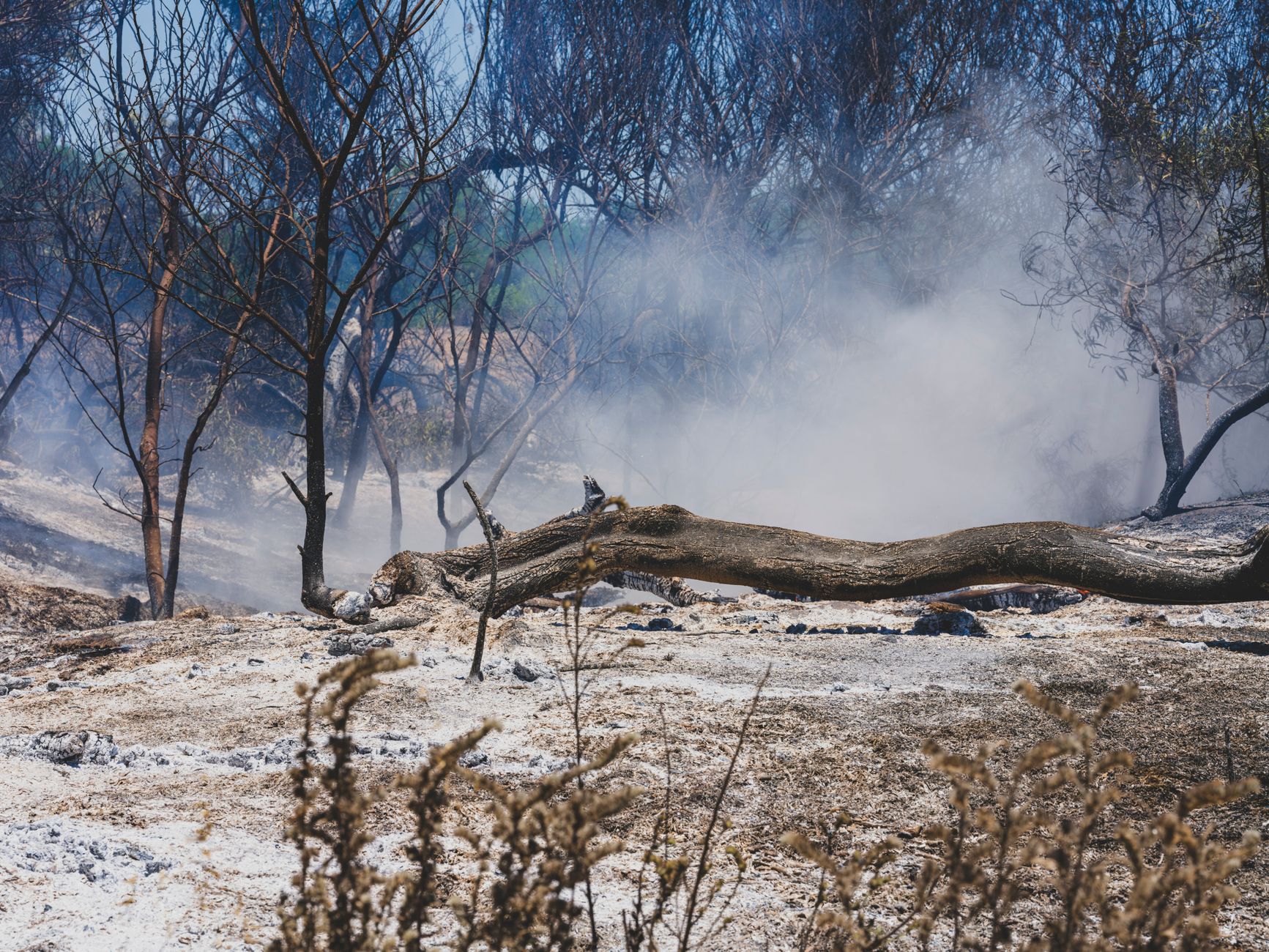
California Wildfire Litigation: How Homeowners Can Pursue Compensation
By Becker Law Group14 min read
Southern California homeowners can pursue wildfire compensation by filing negligence claims against utility companies, government agencies, or other liable parties. Recoverable damages include property loss, temporary housing, medical expenses, and emotional distress. Most wildfire attorneys work on contingency, meaning no upfront cost. Acting quickly preserves critical evidence and meets statute of limitations deadlines in California.
Wildfires across Southern California, including communities near Pasadena, Alhambra, and Los Angeles County, have destroyed tens of thousands of homes and displaced entire neighborhoods. These represent a catastrophe of historic scale, and homeowners deserve to understand every legal avenue available to them.
Who Can Be Held Liable for Southern California Wildfire Damage?
Liability in a California wildfire lawsuit is not limited to the party who struck a match. Under California law, any entity whose negligence was a substantial factor in causing or spreading a fire can be named as a defendant. That includes investor-owned utilities, government agencies, private contractors, and landowners. Establishing that connection requires assembling a factual record from fire investigation reports, equipment maintenance logs, and expert analysis, and it is work that experienced wildfire litigation counsel begins on day one.
The scale of utility exposure is significant. These precedents confirm that California courts and mediators hold utilities financially accountable when negligence is proven.
California's inverse condemnation doctrine adds another powerful avenue. Under this constitutional doctrine, property owners can recover from a utility whose infrastructure caused damage even without proving traditional negligence. If a utility's equipment started the fire, the financial burden shifts to the company, not the homeowner. This is a distinct legal theory that operates alongside, not instead of, standard negligence claims.
How Does Utility Negligence Lead to Wildfire Liability?
Utility companies operating in Southern California, including Southern California Edison, are required to maintain their transmission infrastructure to prevent ignition during high-wind and low-humidity conditions. Failure to de-energize lines during declared red flag events, aging equipment left in service beyond its rated lifecycle, and inadequate vegetation management around conductors are the three most common factual patterns in wildfire negligence cases. California Public Utilities Code § 2106 creates a private right of action allowing injured parties to sue utilities for losses caused by violations of state law or CPUC orders; the high duty of care imposed on utilities derives from PUC § 451 and CPUC General Orders, while CPUC safety regulation violations may be introduced in civil litigation as prima facie evidence of negligence under California Evidence Code § 669. CPUC reports and independent fire investigation findings become the evidentiary backbone of any utility negligence claim, and securing those records early is essential before they are altered or archived.
Can Government Entities Be Sued for Wildfire Damage?
Government immunity under the California Tort Claims Act limits but does not eliminate public agency liability. A dangerous condition of public property, such as unmaintained roadside brush adjacent to a state highway or a faulty traffic control device that caused an accident sparking a fire, can support a claim against a public entity. The procedural requirements are strict. Claims against public entities must be filed within six months of the incident using a government tort claim form, and missing that window almost always bars recovery. Under California's Government Claims Act, the delayed discovery rule does apply: the 6-month claim presentation period generally begins when the plaintiff discovered (or reasonably should have discovered) the injury, not necessarily on the date of the wrongful act itself, though this doctrine is fact-specific and courts scrutinize it carefully. If you suspect a government agency contributed to a fire in your area, a personal injury attorney familiar with government claims procedures must be retained immediately.
What Compensation Can Southern California Homeowners Recover in a Wildfire Lawsuit?
Wildfire victims in California can recover a broad range of economic and non-economic damages through both insurance claims and third-party litigation. Economic damages cover the full cost of rebuilding or replacing a destroyed home, replacement of personal property, temporary housing and living expenses during displacement, and lost business income for self-employed homeowners. Non-economic damages include pain and suffering, emotional distress, and loss of the unique enjoyment of a longtime family property. Where a defendant's conduct was particularly egregious, punitive damages may also be available.
Compensation amounts vary significantly based on property size and value. Litigation recoveries from negligent third parties are separate from and additional to any insurance payments.
Debris removal and toxic ash remediation are frequently overlooked but legally recoverable. Wildfire ash contains arsenic, lead, and other heavy metals from burned structures and consumer products. Professional remediation of a residential lot requires certified contractors, soil testing, and in many cases disposal of contaminated soil. These costs can reach tens of thousands of dollars per property and are recoverable as economic damages in both insurance claims and third-party lawsuits.
How Is Property Damage Calculated in a Wildfire Claim?
The distinction between replacement cost value (RCV) and actual cash value (ACV) is one of the most consequential issues in wildfire property damage disputes. RCV pays the cost to rebuild at current labor and material prices without depreciation. Insurance policies frequently contain RCV provisions but impose conditions, including a requirement to actually rebuild before the full RCV is released. Independent appraisers and forensic accountants document pre-fire property condition, construction costs, and personal property inventories. Pre-fire photographs, tax assessments, home improvement records, and contractor bids all strengthen the damages case. At Becker Law Group, we work with qualified forensic experts who can reconstruct the full value of what a client lost, including custom construction elements and mature landscaping that insurers routinely undervalue.
Can You Recover Compensation Beyond Your Insurance Settlement?
Filing an insurance claim does not waive your right to sue a negligent third party later. These are legally distinct processes, and homeowners are entitled to pursue both simultaneously. The key coordination issue is subrogation: if your insurer pays out a claim and you later recover money from a liable defendant for the same loss, your insurer may have a subrogation lien against that portion of the litigation recovery. A skilled wildfire attorney manages subrogation rights carefully to maximize net recovery for the homeowner. Accepting a homeowners' insurance settlement generally does not bar a separate lawsuit against a negligent utility or third party for uncovered losses, but important exceptions apply: (1) if your insurer initiates subrogation, you typically cannot sue the at-fault party independently without your insurer's consent; and (2) if you accept a direct settlement from the utility company and sign a release, you waive your right to further legal claims against that party.
If your insurer underpaid or denied a legitimate claim, you have a separate cause of action for insurance bad faith under California law. This includes unreasonable delays, use of biased adjusters, failure to conduct a proper investigation, and lowball offers that ignore policy terms. If a California bad faith claim succeeds, a policyholder may recover the full policy benefits owed plus interest, Brandt attorney fees (limited to fees incurred to recover the withheld policy benefits), and extracontractual damages such as emotional distress; punitive damages are also available, but only upon a separate showing by clear and convincing evidence that the insurer acted with malice, oppression, or fraud under California Civil Code § 3294, they are not automatic upon a finding of bad faith. California homeowners insurance premiums have risen 84% since 2020 (woods.stanford.edu), making policy enforcement more important than ever.
Step-by-Step Process for Filing a Wildfire Lawsuit in California
The litigation process for a Southern California wildfire case follows a defined sequence, and the steps taken in the first weeks after a fire have an outsized effect on the final outcome. Evidence degrades fast. Debris fields are cleared by government contractors within weeks. Industry data suggests may be subject to litigation holds only if counsel intervenes early. Understanding the full roadmap helps homeowners take the right action at the right time.
Step 1: Preserve Evidence. Photograph and video everything before any cleanup begins. Collect debris samples. Secure fire department incident reports. Document temporary housing receipts and displacement expenses from day one.
Step 2: Request CAL FIRE and CPUC Investigation Reports. CAL FIRE, the California Department of Forestry and Fire Protection, conducts origin and cause investigations for significant wildfires. These reports identify ignition points and equipment failures. Requesting them early and monitoring their release is a key litigation task.
Step 3: Retain a Wildfire Litigation Attorney. Counsel identifies all potential defendants, evaluates liability theories including inverse condemnation and negligence, and files a complaint within the statute of limitations. California's statute of limitations for property damage is three years from the date of the fire under Code of Civil Procedure Section 338. Government claims have a shorter six-month window.
Step 4: Discovery and Expert Retention. Both sides exchange evidence. Plaintiff counsel deposes utility engineers, safety officers, and maintenance crews. Forensic engineers, property appraisers, and causation experts are retained to build the damages case.
Step 5: Settlement Negotiation or Trial. Most California wildfire cases settle before trial. The strength of the evidence, the identity of the defendant, and the quality of legal representation all determine the settlement value. If a defendant's offer does not reflect full compensation, trial is the right path.
Why Does Acting Quickly After a Wildfire Matter for Your Case?
Speed is not optional in wildfire litigation. For example, consider a family in Altadena who lost their home in the 2025 Los Angeles fires. If they wait three months before contacting a wildfire attorney, critical debris evidence may already be cleared by county contractors, utility maintenance records may be archived, and witness recollections will have faded. By contrast, a family who retained counsel within two weeks secured photographic evidence of charred equipment, obtained CAL FIRE investigation data before it was finalized, and sent legal preservation letters that froze utility company records at the moment of maximum relevance. Physical evidence, including charred equipment components, utility poles, and ignition site materials, is lost once government cleanup crews move through an area. Witness memories fade quickly. Key personnel at utility companies rotate positions or leave employment, making depositions harder to schedule and less probative. Early preservation letters sent to utilities create a legal duty to retain internal maintenance records, inspection logs, and SCADA system data that document whether the company knew its equipment was failing. Wildfire claim programs also carry their own separate deadlines that can run faster than the standard three-year statute. For example, SCE's Wildfire Recovery Compensation Program accepts claims through November 30, 2026; the 90-day figure associated with that program refers to SCE's offer-delivery timeline after a complete claim is submitted, not an enrollment deadline, and claimants retain full litigation rights unless and until they sign a settlement release.
Do not wait. Call counsel the week of the fire if possible.
How to Choose the Right Wildfire Litigation Attorney in Southern California
Selecting the right attorney for a Southern California wildfire case is one of the most consequential decisions a displaced homeowner will make. Not every personal injury attorney is equipped to handle mass tort litigation against a major utility company. The resource and expertise gap between general practice firms and dedicated wildfire litigation teams is real and directly affects outcomes. Here is what to evaluate.
First, confirm demonstrated wildfire or utility negligence litigation experience. Ask for specific case outcomes, not just general claims of experience. A firm that has handled mass tort litigation, retained forensic engineers, and deposed utility company engineers is categorically different from a firm that settles fender-bender cases. Second, verify trial experience. Settlement shops exist in every market. An attorney who has never tried a case to verdict has limited negotiating leverage against a well-resourced defense team. Third, ask about communication and staffing. Will a senior attorney handle your matter personally, or will it be delegated to a junior associate after intake?
Bilingual legal representation is a practical necessity in many Southern California communities. Pasadena, Alhambra, and the broader San Gabriel Valley include large populations of Spanish-speaking and Mandarin-speaking homeowners. A firm that cannot communicate directly with a client in their language introduces errors, delays, and trust barriers that harm outcomes. Contingency fee arrangements mean no upfront cost. Clients should confirm whether litigation costs, such as expert witness fees and filing costs, are advanced by the firm or billed to the client regardless of outcome.
What Questions Should You Ask a Wildfire Attorney Before Hiring?
Before signing a retainer agreement, ask four direct questions. First, have you handled wildfire or utility negligence cases specifically, and what were the outcomes? Vague answers suggest limited experience. Second, will you personally handle my case or assign it to a junior associate? Third, how do you communicate case updates, and how accessible are you during active litigation? Fourth, what is your contingency fee percentage and are there any costs I am responsible for if we lose? A transparent, experienced attorney will answer all four questions directly and in writing.
Common Challenges Homeowners Face in Southern California Wildfire Lawsuits
Wildfire litigation against major utilities is not straightforward. Defendants field large legal teams with one objective: minimize payout. Understanding the obstacles in advance allows homeowners and their counsel to prepare effectively rather than react to defense tactics after the fact. These challenges are real, but they are not insurmountable with the right preparation.
Utility company defenses typically follow a predictable pattern. Defense teams argue that an act of God, extreme Santa Ana wind conditions, or a third-party ignition source was the sole proximate cause of the fire, not their equipment. They claim full regulatory compliance with CPUC rules and argue that compliance equals due care. They challenge the credentials of plaintiff expert witnesses and attempt to suppress internal inspection records through attorney-client privilege or work-product doctrine claims. Experienced plaintiff counsel anticipates each of these moves and builds the record to defeat them.
Smoke and ash damage claims present unique valuation disputes. Insurers frequently deny or minimize smoke damage by arguing that contamination did not reach a threshold requiring full remediation. The standard for what constitutes remediable smoke and ash damage in a residential structure is governed by both California Department of Toxic Substances Control guidelines and industry-standard industrial hygienist assessments. Homeowners whose insurers dispute smoke damage should retain independent certified industrial hygienists to document contamination levels before accepting any settlement. Speak with a wildfire lawyer before signing any settlement or release, because signed releases typically extinguish all future claims, including claims for latent smoke or ash contamination that emerges months after cleanup.
The class action versus individual lawsuit decision also affects recovery. Class actions provide efficiency and broad access for homeowners with smaller claims, but individual settlements may produce higher recoveries for homeowners with substantial property losses. Counsel experienced in both formats can advise which path maximizes a specific client's recovery.
How Do Utility Companies Defend Against Wildfire Lawsuits?
Defense strategies in California utility wildfire cases are well-established. Defendants first challenge causation, arguing that the fire's origin point cannot be definitively tied to their equipment given wind-driven fire behavior and multiple ignition scenarios. They then invoke regulatory compliance as a complete defense, pointing to CPUC-approved maintenance schedules even when internal records show deferred inspections. Defense teams also engage in aggressive expert witness challenges, filing Daubert-style motions to exclude plaintiff engineers and appraisers from testifying. Privilege claims over internal inspection logs and SCADA data create delays that disadvantage plaintiffs who did not send early legal hold letters. The answer to each defense is a well-documented factual record assembled before evidence disappears, a preparation advantage that accrues entirely to plaintiffs who engage counsel early.
| Challenge | Defense Tactic | Plaintiff Counter-Strategy |
|---|---|---|
| Causation | Blame weather or third party | CAL FIRE report + forensic ignition expert |
| Negligence | CPUC compliance as defense | Show deferred maintenance in internal logs |
| Evidence access | Privilege claims over records | Early legal hold letters |
| Expert testimony | Daubert motions to exclude | Retain credentialed forensic engineers |
| Damages valuation | Depreciate to ACV | Independent appraiser + RCV policy analysis |
| Smoke/ash damage | Deny threshold contamination | Certified industrial hygienist assessment |
The data is clear. Preparation wins cases. Delay loses them.
Frequently Asked Questions
How long do I have to file a wildfire lawsuit in California?
California's statute of limitations for property damage is three years from the date of the fire under Code of Civil Procedure Section 338. Claims against government entities must be filed within six months using a tort claim form. Utility wildfire compensation programs may set enrollment deadlines of 90 to 180 days, so act immediately to preserve all options.
Can I sue a utility company like Southern California Edison for wildfire damage to my home?
Yes. Utility companies can be held liable under both negligence theory and California's inverse condemnation doctrine. Negligence claims require showing the utility failed to maintain equipment or de-energize lines during red flag conditions. Inverse condemnation allows recovery when utility infrastructure caused the fire, even without proving traditional negligence. Past California wildfire utility settlements have reached billions of dollars.
What is the difference between a wildfire insurance claim and a wildfire lawsuit?
An insurance claim is filed against your own policy and governed by your policy terms. A wildfire lawsuit is filed against a negligent third party, such as a utility company or contractor, and seeks damages beyond what insurance covers. Filing an insurance claim does not waive your right to sue a negligent party later. Both can proceed simultaneously, with subrogation coordinated by counsel.
Do I need to hire a lawyer to file a wildfire compensation claim?
You are not legally required to hire an attorney, but wildfire cases against utilities or insurers involve complex liability theories, expert witnesses, and tight deadlines that are difficult to navigate without legal experience. An attorney identifies all available defendants, manages evidence preservation, negotiates settlements, and, if necessary, takes the case to trial. Most wildfire lawyers work on contingency with no upfront cost.
How much does it cost to hire a wildfire litigation attorney in California?
Most California wildfire litigation attorneys work on a contingency fee basis, meaning you pay nothing upfront and the attorney collects a percentage only if the case succeeds. Typical contingency fees range from 33% to 40%, depending on whether the matter settles or goes to trial. Confirm in writing whether litigation costs like expert witness fees are advanced by the firm or charged regardless of outcome.
What evidence do I need to support a wildfire lawsuit?
Strong wildfire cases rest on photographs and video of the damage, pre-fire property records including tax assessments and home improvement invoices, fire department and CAL FIRE investigation reports, utility maintenance and inspection records, expert appraisals of property value, and independent industrial hygienist reports for smoke and ash contamination. Temporary housing receipts and displacement expense records document economic damages. Preserve everything before cleanup begins.
Can I still file a wildfire lawsuit if my insurance company already paid out a claim?
Yes. An insurance payout does not eliminate your right to pursue a third-party negligence lawsuit. If litigation recovers money for losses your insurer already covered, subrogation rights may apply to that overlapping portion, but a skilled attorney manages subrogation liens to protect your net recovery. Underpaid or denied insurance claims can also be challenged through separate insurance bad faith litigation under California law.
What is California's inverse condemnation law and how does it help wildfire victims?
California's inverse condemnation doctrine is a constitutional provision that allows property owners to recover from a utility or public entity whose infrastructure caused damage, without proving traditional negligence. If a utility's power line started a fire that destroyed your home, the utility bears the financial burden of your loss even if it technically complied with regulations. This doctrine significantly broadens recovery options for Southern California wildfire victims.
Can I sue my insurance company for underpaying smoke damage?
Yes. California law prohibits insurance bad faith, which includes unreasonable denial or underpayment of legitimate smoke and ash damage claims. If your insurer refuses to fund full remediation, disputes contamination levels without independent testing, or delays your claim without justification, you may have a bad faith claim. Remedies include the full policy benefit, attorney fees, and in egregious cases, punitive damages. Retain an industrial hygienist before accepting any settlement.
What compensation can I recover in a California wildfire lawsuit?
Recoverable damages include property repair or full replacement cost, personal property loss, temporary housing and living expenses, lost business income, debris removal, toxic ash remediation, diminution in property value, pain and suffering, emotional distress, and loss of use. Published settlement data reflects recoveries of $550 to $750 per square foot for destroyed homes. Punitive damages may be available where defendant conduct was egregious.
Do wildfire deductibles affect how much I can recover?
Yes. California homeowners policies often include a separate wildfire or wind/fire deductible, which can be a flat dollar amount or a percentage of the insured value, sometimes 2% to 5%. Your insurance recovery is reduced by this deductible amount. However, a third-party lawsuit against a negligent utility or contractor is not subject to your insurance deductible. A full legal recovery from litigation is independent of policy deductible provisions.
Sources & References
- California's Home Insurance Crisis Is Spreading Beyond Wildfire Country - Stanford Woods Institute[edu]
- California Government Code § 911.2 – California Legislative Information[factcheck]
- Public Utilities Code § 2106 – California Legislative Information (leginfo.legislature.ca.gov)[factcheck]
- Ratepayer Impacts of Strict Liability and Inverse Condemnation – California Public Advocates (CPUC)[factcheck]
About the Author
Becker Law Group
Becker Law Group is a Pasadena-based litigation firm providing bilingual legal representation in personal injury, wrongful death, mass tort, business law, medical malpractice, and immigration cases throughout California.
Related Posts
What to Do After a Car Accident in Pasadena: A Legal Checklist
After a car accident in Pasadena, the steps you take in the first 24-72 hours can make or break your injury claim. This legal checklist walks you through everything from the accident scene to hiring a car accident lawyer, so you protect your rights and maximize your compensation.
12 min read

How Contingency Fees Work for Personal Injury Cases in Pasadena
If you've been injured in Pasadena and can't afford an attorney upfront, a contingency fee arrangement means you pay nothing unless your case wins. This guide explains exactly how the fee structure works, what percentage attorneys typically take, and what costs you should watch for before signing a retainer.
8 min read